



“We live in a world that never really switches off, and our sleep ispaying the price.”
Sleep should be one of the simplest things we do. Night comes, the body slows down, the mind settles, and eventually we drift off. Yet for millions of people around the world, bedtime has become another part of the day to struggle through. The phone is still in our hand, work follows us home, stress keeps the mind active, dinner happens late,and tomorrow's responsibilities are already running through ourheads. The result can be difficulty falling asleep, repeated waking,early-morning awakening, or simply getting enough hours in bed but waking up feeling completely drained. Sleep problems are now recognised as a major global health concern, with insomnia affecting a substantial proportion of adults worldwide.
And when sleep doesn't come naturally, many people turn to supplements,especially melatonin.It has become one of the most recognisable ingredients in the sleep category because it is naturally produced by the human body and plays an important role in regulating our internal body clock. But there is an important distinction between helping the body understand that it is time for sleep and simply making someone unconscious.Melatonin is not a universal sleeping pill and understanding what it does is the key to using it intelligently.
Why Is Sleep Becoming Such a Problem?
Modern life has changed dramatically, but our basic biology hasn't changed at the same speed.
Our ancestors did not have emails arriving at midnight, smartphone slighting up the bedroom, international meetings crossing time zonesor entertainment available endlessly at the touch of a screen.
Today,our brains can remain stimulated long after our bodies are physicallytired.
Some of the most common contributors to poor sleep include:
Chronic stress: Financial pressure, work demands, relationships and everyday uncertainty can keep the nervous system in a state of alertness.
Irregular schedules: Shift work, travel, late nights and inconsistent wake times can disturb the body's biological clock.
Evening screen exposure: Phones, tablets, computers and televisions provide both light and constant mental stimulation.
Caffeine: Coffee, tea, energy drinks and pre-workout products can interfere with sleep when consumed too late.
Late or heavy meals: Eating close to bedtime can cause discomfort and may worsen reflux in susceptible individuals.
Insufficient daytime activity: A sedentary lifestyle can reduce the natural drive for sleep.
Environmental disruption: Noise, light, temperature and an uncomfortable bedroom can fragment sleep.
The problem is therefore rarely just “not enough sleep.”
Sometimes the real problem is that the body is receiving the wrong signals about when it should beawake and when it should be asleep.
What Is Melatonin?
Melatonin is a hormone produced primarily by the pineal gland in response to darkness. Its most important role is not to “knock you out.”Instead, melatonin helps communicate the message:
“Itis biological night.”
Under normal conditions, melatonin production rises during the evening and remains elevated during the night before falling toward morning.
This is one reason light exposure at the wrong time can matter.
A brightly lit screen at midnight, for example, is not just a visual experience. It can become another environmental signal telling the brain that the day is not quite over.
Melatonin supplements attempt to reinforce or shift this biological timing signal.
Why Does Your Body Need Melatonin?
Your body uses an internal timing system known as the circadian rhythm.
This approximately 24-hour system helps coordinate sleep and wakefulness along with many other physiological processes. Melatonin acts as one of the signals that helps synchronize this rhythm with the external light-dark cycle.
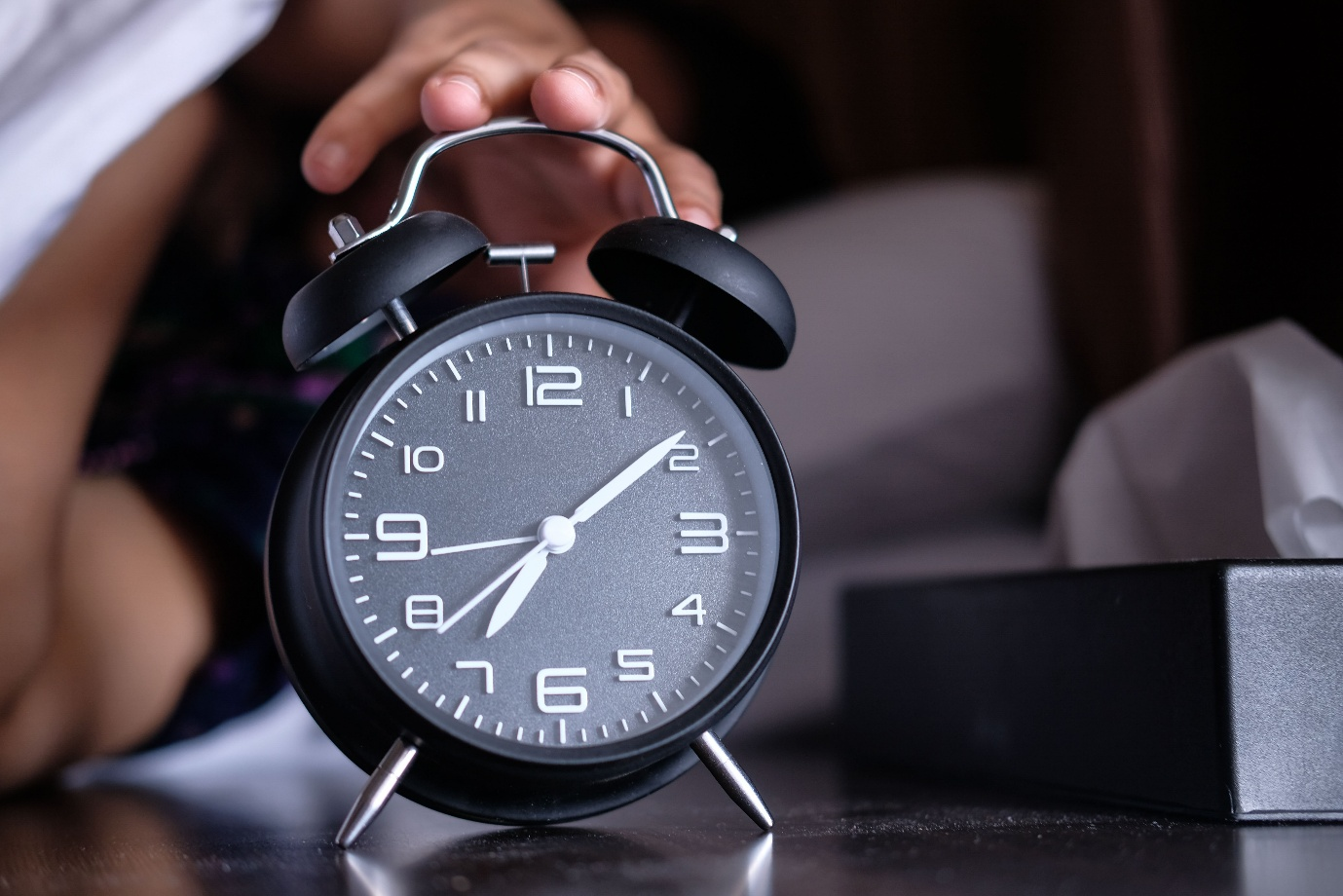
In simple terms:
Light tells your body “Day.” Darkness helps signal “Night.”
Melatonin helps communicate that timing internally.
This is why melatonin can be particularly relevant when the problem involves sleep timing.However, it also explains why taking a large dose of melatonin doesn't necessarily solve every type of insomnia. If your problem is racing thoughts caused by chronic stress, an uncomfortable sleeping environment, sleep apnea, excessive caffeine or another underlying condition, simply adding melatonin may not address the real cause.
How Does Melatonin Work for Sleep?
Think of melatonin as a clock signal rather than a knockout switch.Supplemental melatonin can increase the body's melatonin signal and,depending on timing, influence the circadian system. Clinical research suggests that melatonin may help reduce the time required to fall asleep in some people with insomnia. However, improvements in other measures, such as total sleep time, nighttime awakenings and overall sleep quality, are less consistent.
The evidence is more compelling for certain circadian rhythm problems.
For example, melatonin has been studied in conditions where a person's internal body clock is shifted later than desired, as well as in jetlag and other situations involving disrupted circadian timing.
This gives us a much more useful way to think about melatonin:
Melatonin may be most useful when timing is part of the problem, not necessarily when insomnia has another underlying cause.

How Much Melatonin Do You Need?
This is where consumers often make a mistake
More melatonin = stronger sleep = better results.
That isn't necessarily true.
The appropriate dose depends on the intended use, formulation, age,individual response and regulatory environment.
Clinical studies have used different doses and schedules, so there is no-single universally appropriate dose for everyone.
2mg Melatonin
Among the commonly discussed doses, 2 mg has particularly strong clinical evidence when used as a prolonged-release formulation, especially in adults aged 55 years and older with insomnia. Randomized controlled trials found that 2 mg prolonged-release melatonin improved sleep quality, reduced sleep-onset latency and improved morning alertness,with a venerability profile comparable to placebo. One study involving 354 adults aged 55–80 found clinically meaningful improvements in both sleep quality and morning alertness, while another study reported no significant impairment of psychomotor performance, memory or driving ability during the night or following morning. A French sleep-medicine consensus specifically recommends 2mg slow-release melatonin, taken 1–2 hours before bedtime, for selected adults with primary or uncomplicated insomnia. For a formulation designed around restorative sleep and waking up feeling fresh rather than sedated, 2 mg prolonged-release therefore has a particularly compelling clinical rationale although much of the strongest evidence is in older adults and should not be generalized to every population.
Reference:Prolonged-release melatonin improves sleep quality and morning alertness in insomnia patients aged 55 years and older and has no withdrawal effects.
Patrick Lemoine 1, TaliNir, MosheLaudon, NavaZisapel
PMID: 18036082,DOI: 10.1111/j.1365-2869.2007.00613.x
3mg Melatonin
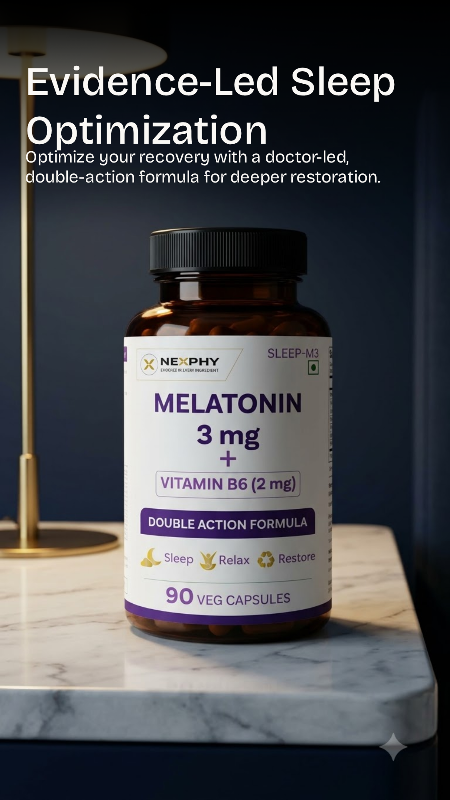
(Mention add to cart with price details)
3 mg melatonin is another frequently studied dose, particularly in immediate-release formulations. In a randomized, double-blind, placebo-controlled trial involving 97 middle-aged adults with primary insomnia, participants received 3 mg fast-release melatonin one hour before bedtime for four weeks. The study found improvements in some objective sleep parameters, including reduced early-morning wake time, but did not demonstrate significant improvements across all subjective insomnia measures or daytime sleepiness. Importantly, no serious adverse events were reported. This makes 3 mg a reasonable evidence-based dose to discuss for sleep support, particularly where the formulations intended to assist sleep initiation, but it should not automatically be considered superior to 2 mg. For consumers whose priority is falling asleep while remaining clear-headed the next morning, the response to 3 mg should be judged individually rather than assuming that a higher dose will produce deeper or more restorative sleep.
Reference:Efficacy of melatonin for sleep disturbance in middle-aged primary insomnia: a double-blind, randomised clinical trial, Huajun Xu, Chujun Zhang,Yingjun Qian, Jianyin Zou, Xinyi Li, Yupu Liu, Huaming Zhu, LiliMeng, Suru Liu, Weitian Zhang, Hongliang Yi, Jian Guan, ZhengnongChen, Shankai Yin.
DOI:https://doi.org/10.1016/j.sleep.2020.10.018
5mg Melatonin
5mg melatonin is a higher-dose option that has also been studied inhuman clinical trials, including studies using immediate-release melatonin. It can be relevant when a formulation is designed around a stronger exogenous melatonin signal, but it should not be presented as automatically more effective than 2 or 3 mg. A 2024 systematic review and dose-response meta-analysis of randomized controlled trials found that the sleep-promoting effects increased with dose up to approximately 4 mg/day, suggesting that moving to 5 mg does not necessarily provide additional benefit. The practical choice shouldtherefore depend on the sleep objective, timing, formulation,individual response and tolerability. For a consumer product, 5 mg is best positioned as a higher-dose option rather than as the default or'strongest' choice.
Reference:Optimizing the Time and Dose of Melatonin as a Sleep-Promoting Drug:A Systematic Review of Randomized Controlled Trials and Dose-Response Meta-Analysis.
FrancyCruz-Sanabria, Simone Bruno, Alessio Crippa, Paolo Frumento, MarcoScarselli, Debra J Skene, Ugo Faraguna.
PMID:38888087, DOI: 10.1111/jpi.12985
Which Form of Melatonin Is Better?
Melatonin products can use different delivery approaches.
Immediate-release melatonin
This releases melatonin relatively quickly and may be more appropriate when the primary objective is supporting sleep initiation.
Prolonged-or controlled-release melatonin
These formulations are designed to provide a more sustained release profile and may be considered when maintaining the sleep period is part of the product's intended purpose.
The best form therefore depends on the problem being addressed.
From a formulation perspective, the question shouldn't be:
“Which form is more premium?”
It should be:
“Which delivery profile best matches the intended physiological objective?”
Is Melatonin Safe?
For many adults, short-term melatonin use appears to have a relatively favorable safety profile. Reported side effects can include headache, dizziness, nausea and daytime sleepiness. However,long-term safety data remain more limited.
Extra caution is appropriate for people who:
Take prescription medicines.
Are pregnant or breastfeeding.
Have epilepsy or other neurological conditions.
Can You Get Melatonin Naturally?
Your body already makes melatonin.
The goal, therefore, isn't simply to consume more it is also to protect your body's natural production and circadian rhythm.
You can support this system through everyday habits:
Get natural daylight during the day, particularly earlier in the day.
Dim bright artificial light in the evening.
Keep your sleep and wake times relatively consistent.
Reduce stimulating screen use before bed.
Exercise regularly.
Avoid excessive caffeine late in the day.
Keep the bedroom dark and comfortable.
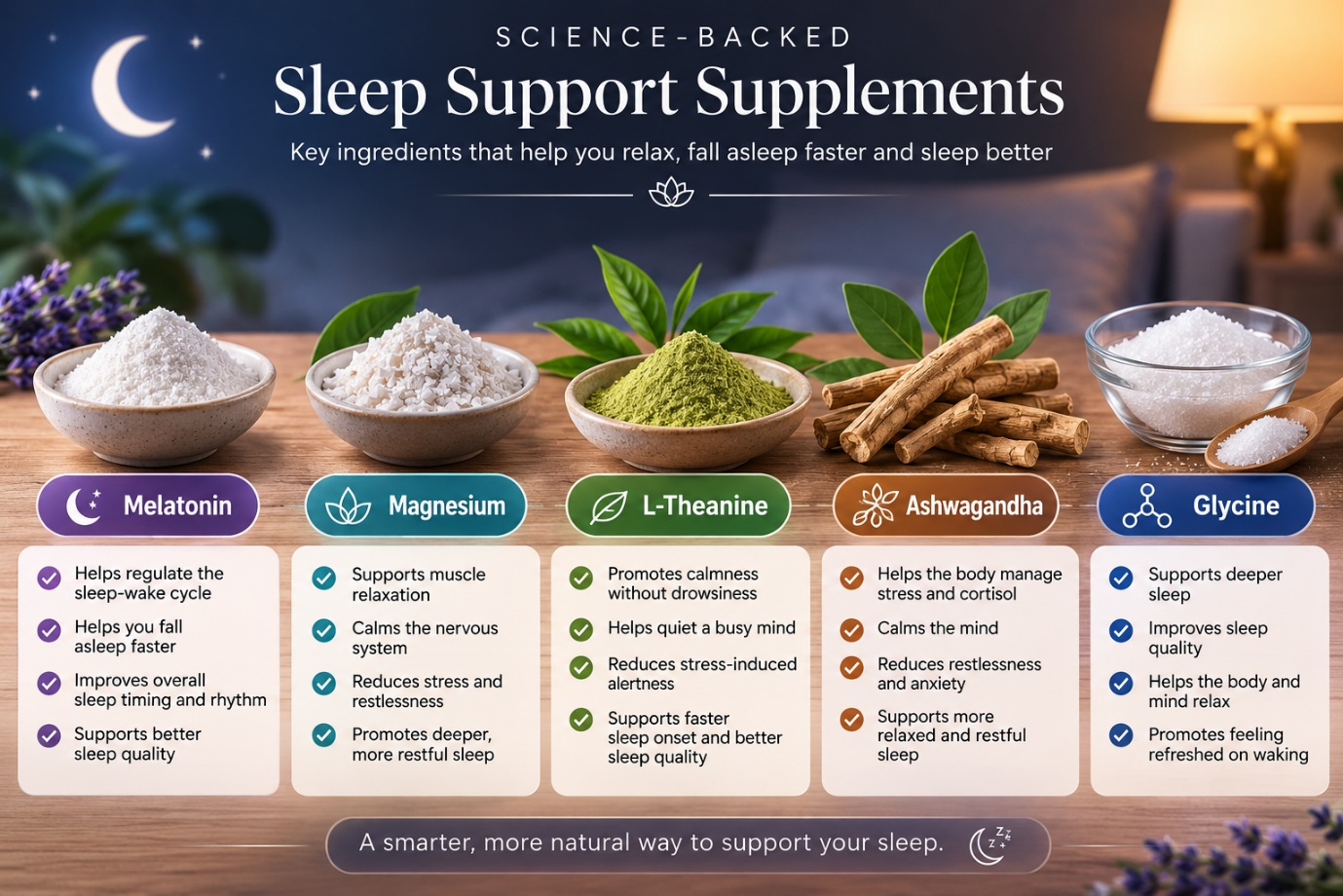
What About Other Sleep Supplements?
Melatonin's not the only ingredient found in sleep formulas.
Other commonly used ingredients include:
Magnesium
Magnesium contributes to normal nervous-system and muscle function. Some studies suggest potential sleep benefits, but clinical evidence specifically for insomnia remains limited and inconsistent.
L-Theanine
This amino acid is commonly used in relaxation-focused formulations. Its potential role is more closely associated with supporting relaxation than acting as a conventional sedative.
Glycine
Human research has explored approximately 3 g before bedtime, with some studies reporting improvements in subjective sleep measures.
Ashwagandha
Certain standardized extracts have been studied for stress and sleep-related outcomes. However, results depend on the specific extract, dose and population.
Howto Choose a Good Sleep Supplement
Before buying a sleep supplement, look beyond the front of the bottle.
Check the ingredient
Is it actually relevant to the sleep problem?
Check the dose
Is there enough to be meaningful based on human evidence?
Check the form
Is it the appropriate chemical form, botanical extract or delivery system?
Check the evidence
Has the specific ingredient and form been studied in humans?
Check the quality
Look for transparent manufacturing and quality-control practices.
Check the label
Avoid products that hide important quantities inside proprietary blends.
Check Purity and Quality
Choose products manufactured in GMP-certified plants and tested in independent laboratories. Products that disclose the sources and purity of the ingredients used are more trustworthy.
Check FSSAI License and Indian Label Compliance
When choosing a health supplement in India, consumers should check the label for key regulatory information, including the FSSAI logo and licence number, ingredient list, nutrition information, net quantity,manufacturer/brand-owner details.
And remember:
“10ingredients” doesn't mean “10 times better.”
A focused formula can be more scientifically rational than a crowded formula containing tiny amounts of everything.

Do'sand Don'ts for Better Sleep
Do’s
Keep your sleep schedule consistent.
Get daylight exposure during the day.
Exercise regularly.
Manage caffeine timing.
Create a relaxing pre-bed routine.
Choose supplements based on evidence, dose and formulation.
Address persistent sleep problems professionally.
Don't
Assume melatonin fixes every type of insomnia.
Automatically choose the highest dose.
Mix multiple sleep supplements without understanding them.
Depend on alcohol to make yourself sleepy.
Ignore loud snoring or nighttime breathing problems.
Replace proper insomnia treatment with supplements alone.
KeyTakeaways
Sleep problems are a growing global health concern.
Modern stress, technology, irregular schedules and lifestyle habits can disrupt healthy sleep.
Melatonin is primarily a biological timing signal, not simply a sleeping pill.
It may be particularly useful for certain circadian rhythm problems.
Evidence for chronic insomnia is more limited and should not be overstated.
Dose, timing and formulation all matter.
More melatonin does not automatically mean better sleep.
Food and healthy daily routines support the body's natural sleep system.
A well-designed sleep supplement should be evidence-led rather than ingredient-heavy.
Persistent or severe sleep problems deserve professional evaluation.
20FAQs About Melatonin and Sleep
1.What is melatonin?
Melatonin is a hormone produced primarily by the pineal gland that helps regulate the body's circadian sleep-wake timing.
2.Does melatonin make you sleep?
It can promote sleepiness and influence sleep timing, but it does notwork like a conventional sedative.
3.Is melatonin effective for insomnia?
It may help some people fall asleep faster, but evidence for chronic insomnia is mixed.
4.What is the best time to take melatonin?
Timing depends on the individual's sleep problem and the intended purpose of supplementation.
5.Is a higher melatonin dose better?
No.Higher doses are not automatically more effective.
6.Can melatonin help with jet lag?
Yes.Melatonin has been studied extensively for circadian disruption associated with travel and jet lag.
7.Can melatonin reset the body clock?
It can influence circadian timing when used appropriately, particularly when timing and light exposure are also managed.
8.Can I take melatonin every night?
Some people use it regularly, but long-term use should be discussed with a healthcare professional.
9.Is melatonin addictive?
Melatonin is not generally considered addictive like many conventional sedative medicines.
10.Can melatonin cause side effects?
Yes.Headache, dizziness, nausea and daytime sleepiness have been reported.
11.Can melatonin cause morning grogginess?
It can cause daytime sleepiness in some individuals, particularly depending on dose and timing.
12.Is melatonin safe during pregnancy?
Safety information is insufficient, so pregnant or breastfeeding individuals should seek professional advice.
13.Can children take melatonin?
Children should use melatonin only under appropriate healthcare guidance.
14.Can I take melatonin with medication?
Some interactions are possible. People taking medication should check with a healthcare professional.
15.Does magnesium help sleep?
It may help some people, but current evidence specifically for insomnia remains limited and inconsistent.
16.Does screen time affect sleep?
Evening screen exposure can contribute through both light exposure and mental stimulation.
17.Can stress cause insomnia?
Yes.Stress can increase mental and physiological arousal, making sleep more difficult.
18.How do I choose a good melatonin supplement?
Look for transparent labeling, an appropriate dose, suitable formulation,quality manufacturing and credible human evidence.
19.When should I see a doctor about sleep?
Seek professional advice if sleep problems persist, affect daytime functioning or occur with symptoms such as loud snoring, gasping or severe daytime sleepiness.
20.What is the best supplement for sleep?
There is no universal “best” supplement. The appropriate choice depend son the underlying sleep problem, evidence, dose, formulation, safety and individual circumstances.
Conclusion
Melatonin deserves its place in the sleep conversation but not because it is a magic pill.
Its real value comes from understanding what it does, when it works, how much is appropriate and when it isn't the right answer.
Better sleep isn't created by a capsule alone.
It is built through the interaction of your body clock, light exposure, daily activity, stress, nutrition, sleep environment and behavior.
And when supplementation is appropriate, the smartest choice isn't necessarily the strongest product.