



Byevening, your body feels stiff, heavy, or physically drained. Yourmuscles seem to need a break, yet when you finally get into bed, yourmind decides it is the perfect time to start thinking abouteverything.
Work.
Tomorrow'splans.
Things you forgot.
Things you should havesaid.
Things you still need to do.
Yourbody wants to rest, but your mind keeps running.
Soundfamiliar?
Thiscombination of tiredness, physical tension and mental restlessness isbecoming increasingly common in busy lifestyles. And while sleep isimportant, the journey toward good rest begins much earlier with howwell your body transitions from activityto relaxation and recovery.
Thisis where magnesium becomes interesting.
WhyIs Magnesium Important for the Body?
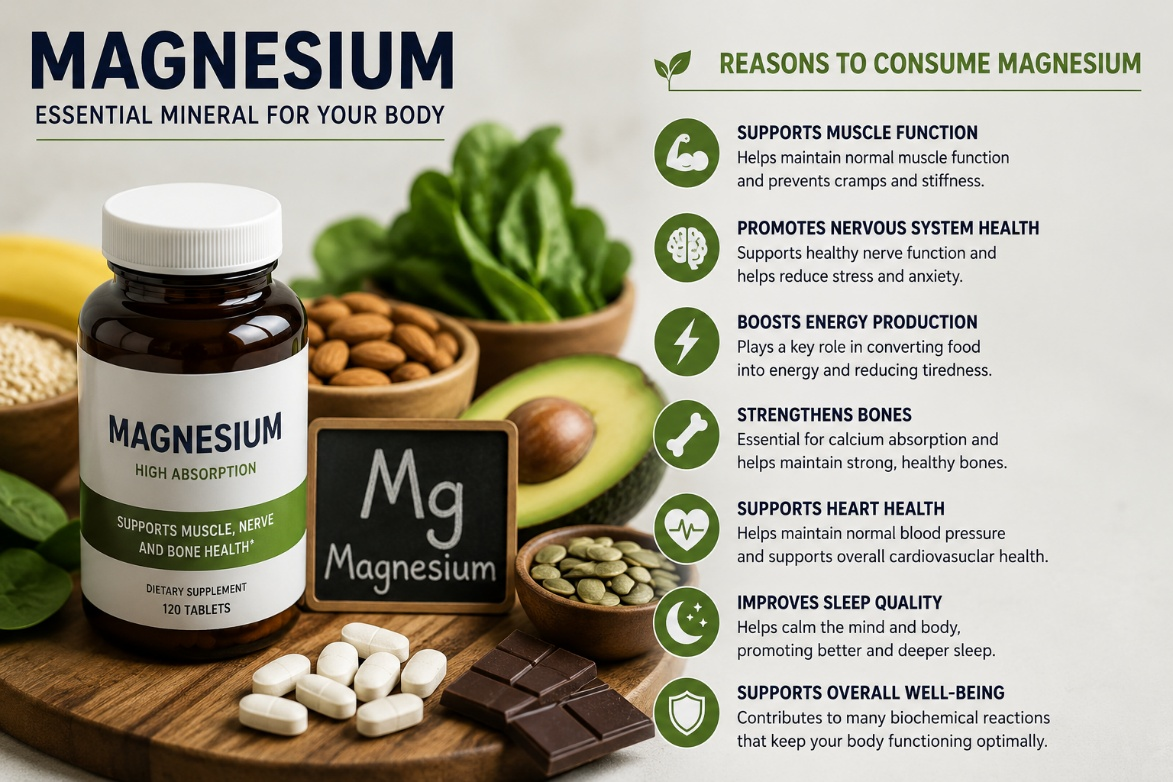
Magnesiumis an essential mineral involved in hundreds of processes in thebody.
Itcontributes to normal:
Muscle function
Nervous-system function
Energy-yielding metabolism
Electrolyte balance
Protein synthesis
Maintenance of normal bones
Somagnesium isn't simply a "sleep mineral."
Itis involved in the systems that help your body move,function, produce energy and relax normally.
Butthere is something many people don't realize:
NotAll Magnesium Is the Same.
Walkinto a supplement store and you'll find magnesium oxide, citrate,glycinate, bisglycinate, liposomal magnesium and several other forms.
Theyall provide magnesium but they don't necessarily behave the same wayin a formulation.
Theform can influence solubility,absorption, elemental magnesium, tolerability and the overall purposeof the product.
Sothe question isn't simply:
"AmI taking magnesium?"
Thebetter question is:
Whichform of Magnesium should I take?
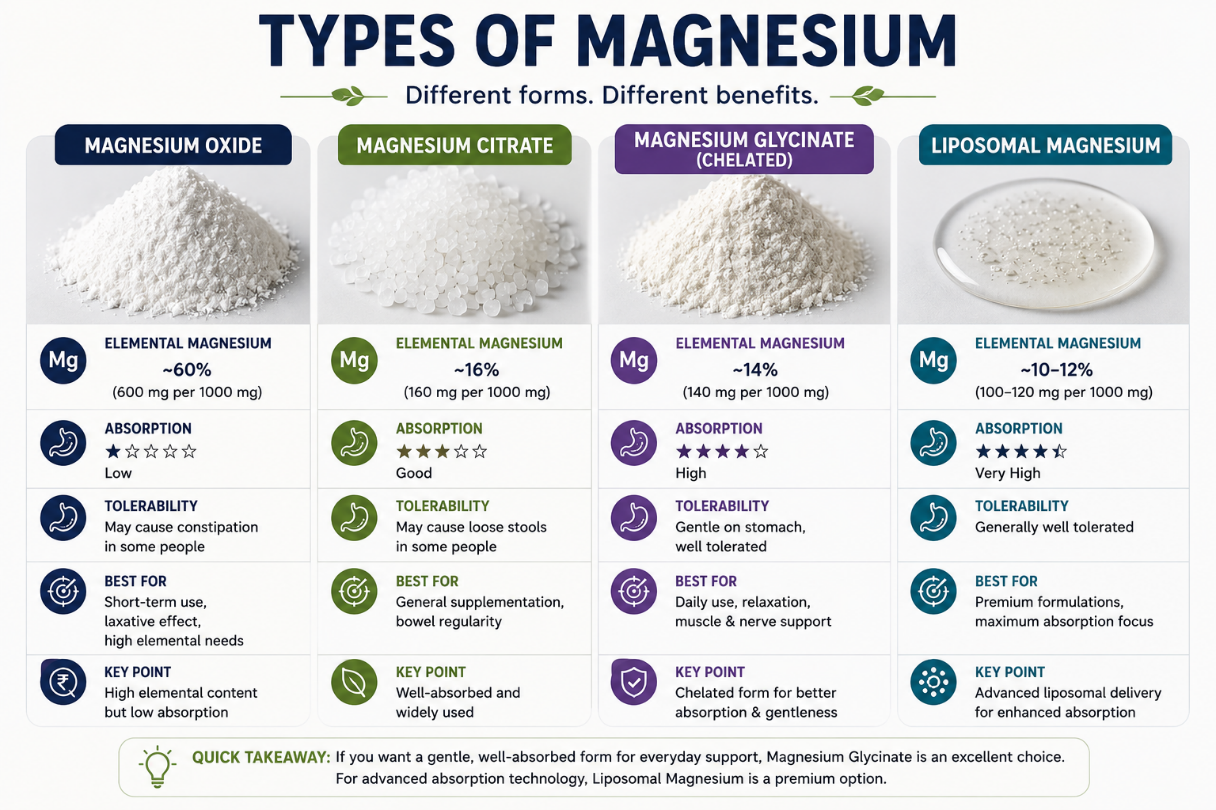
MagnesiumOxide
Magnesiumoxide is a common and economical form.
Itsadvantage is that it provides a relatively high amount of elementalmagnesium.
However,it has lower solubility and generally lower bioavailability thanseveral more soluble forms.
Itmay therefore be suitable when costand elemental magnesium loadingare priorities, but it isn't always the first choice for a premiumdaily relaxation formula.
MagnesiumCitrate
Magnesiumcitrate is a well-established form with good solubility and betterabsorption than magnesium oxide.
Itis commonly used for general magnesium supplementation.
However,at higher doses, magnesium citrate may have a laxative effect in somepeople.
Forsomeone looking for everyday magnesium support, citrate can be apractical option.
MagnesiumGlycinate & Bisglycinate
Nowwe come to one of the most popular forms for relaxation-focusedproducts.
Magnesiumglycinate/bisglycinate is a chelatedform, where magnesiumis associated with the amino acid glycine.
Whydoes that matter?
Chelationcan help create a well-tolerated form of magnesium with goodbioavailability characteristics.
Thisis one reason magnesium bisglycinate is frequently chosen for:
Musclesupport + nervous-system support + evening relaxation formulas.
Itis also generally considered gentler on the digestive system thansome other forms.
Fora premium relaxation product, magnesiumbisglycinate is therefore a very attractive starting point.
WhatMakes Liposomal Magnesium Different?
Liposomalmagnesium takes a different approach.
Insteadof simply changing the magnesium compound, it focuses on the deliverysystem.
Themagnesium is incorporated into or associated with lipid-basedstructures designed to influence its delivery and interaction withthe digestive environment.
Thismakes liposomal magnesium interesting as an advanceddelivery and premium formulation concept.
Butthere is an important point:
"Liposomal"doesn't automatically mean "best absorbed."
Thequality of the delivery system matters including lipid composition,particle characteristics, encapsulation, stability and the actualfinished-product performance.
Sowhile liposomal magnesium is an exciting area of formulation science,it should be supported by appropriate quality and performance datarather than relying only on the word "liposomal."
SoWhich Magnesium Should You Choose?
Thereis no single magnesium form that is best for everyone.
Theright choice depends on the purpose.
Magnesiumoxide
Good foreconomical formulations and high elemental magnesium loading.
Magnesiumcitrate
Awell-established, soluble form for general supplementation.
Magnesiumglycinate/bisglycinate
Achelated, well-tolerated option particularly attractive for muscle,nervous-system and relaxation-focused products.
Liposomalmagnesium
Anadvanced delivery concept suited to premium formulations where thedelivery technology is properly characterized.
Andthere is one number you should always look at:
Understandthe science of Elemental Magnesium
Don'tcompare products simply by the weight of the magnesium compound.
Forexample:
500mg magnesium bisglycinate does not mean 500 mg elemental magnesium.
Alwayslook at how much elementalmagnesium the productprovides.
Magnesium+ L-Theanine: Why Combine Them?
Nowreturn to the original problem.
Thebody is tired.
Thebody feels stiff.
Themind is still active.
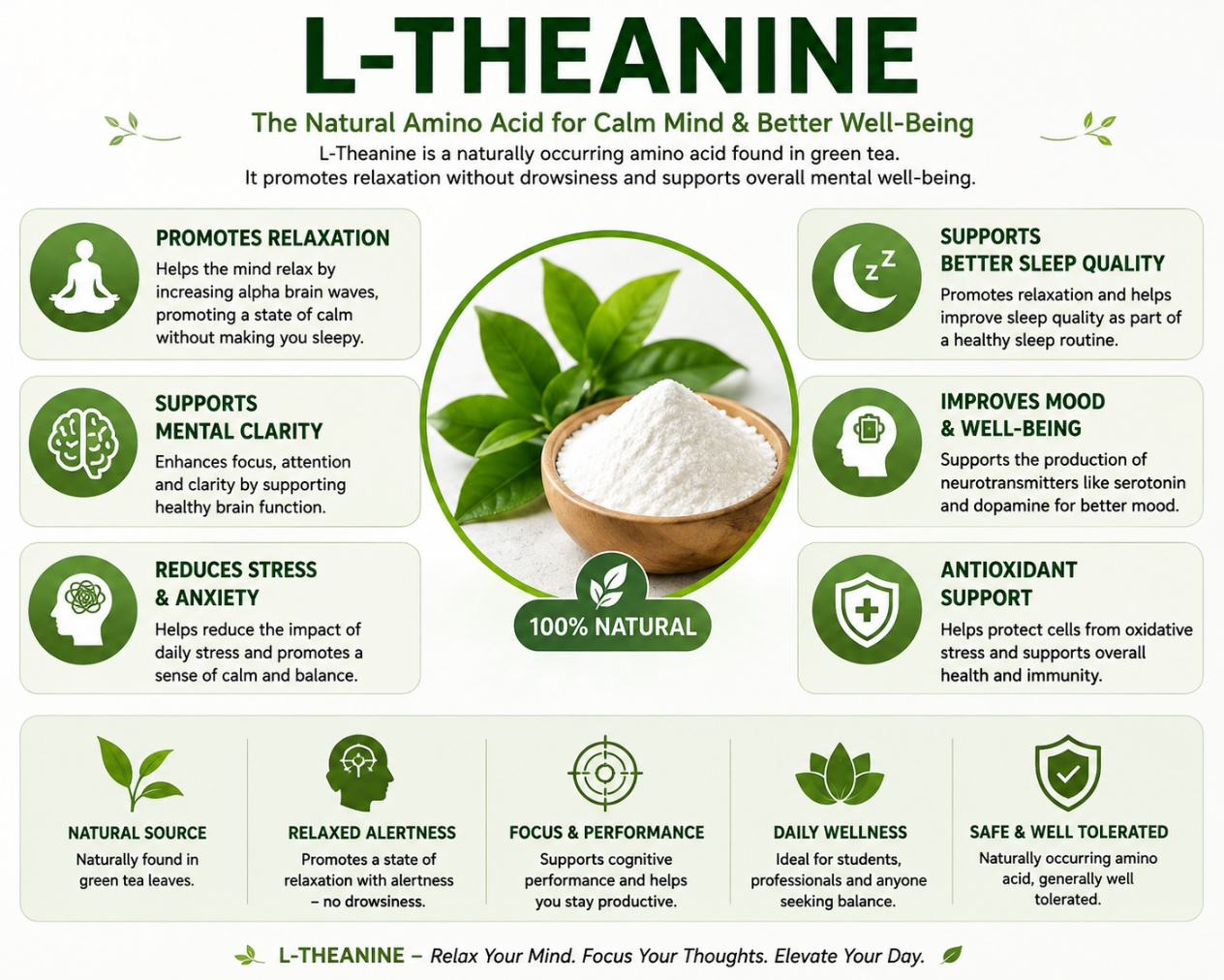
Magnesiumand L-theanine bring two complementary sides to the formulation.
Magnesiumprovides nutritional support for normalmuscle and nervous-system function,while L-theanine is commonly used in relaxation-focused products tosupport calmness andmental relaxation.
Thatcreates a simple concept:
Magnesiumfor the body.
L-Theaninefor the mind.
Together,they support the transition from:
Dailystress → Physical fatigue → Relaxation → Recovery → Rest
Conclusion
Ifyou're tired all day, stiff by evening and still dealing with runningthoughts at night, your body may be telling you that recovery needsmore attention.
Magnesiumis an essential mineral that supports normal muscle function,nervous-system function, energy metabolism and bone health.
Butthe form matters.
Forgeneral supplementation, citrate may be a practical choice.
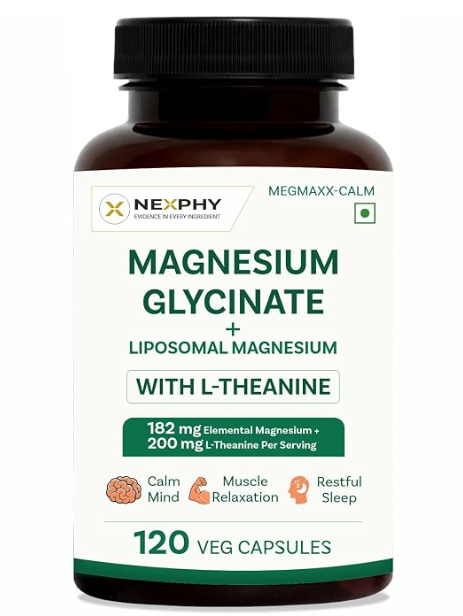
Fora relaxation-focused formula, magnesiumglycinate/bisglycinateoffers an attractive chelated option with good tolerability.
Foran advanced premium concept, liposomalmagnesium brings anadditional delivery-technology approach.
Andwhen combined with L-theanine,the formulation can address both sides of the evening relaxationexperience:
Atired body.
A busy mind.
One goal, relaxation and recovery.
Healthy
20Frequently Asked Questions, Magnesium & L-Theanine
1.What are the benefits of magnesium and L-theanine together?
Magnesiumsupports normal muscle and nervous-system function, while L-theanineis commonly used to support relaxation and calmness. Together, theyoffer complementary nutritional support for a relaxed body and mind.
2.What is magnesium good for?
Magnesiumis an essential mineral that contributes to normal muscle function,nervous-system function, energy-yielding metabolism, electrolytebalance, protein synthesis, and maintenance of normal bones.
3.What is L-theanine?
L-theanineis a naturally occurring amino acid found primarily in tea leaves,especially green tea. It is widely used in supplements designed tosupport relaxation, calmness, and mental focus.
4.Can magnesium and L-theanine help with relaxation?
Bothingredients are commonly included in relaxation-focused supplements.Magnesium supports normal nervous-system and muscle function, whileL-theanine has been studied for its role in promoting relaxation andcalmness.
5.Which magnesium is best for relaxation?
Magnesiumglycinate or bisglycinate is a popular choice for relaxation-focusedformulations because it is a chelated form and is generally welltolerated. The best form ultimately depends on the desired dose,absorption, tolerability, formulation and individual needs.
6.What is magnesium glycinate?
Magnesiumglycinate, often referred to as magnesium bisglycinate, is a chelatedform of magnesium associated with the amino acid glycine. It iscommonly selected for its good tolerability and suitability for dailymagnesium supplementation.
7.Is magnesium glycinate better absorbed than magnesium oxide?
Magnesiumglycinate is generally considered a more bioavailable option thanmagnesium oxide, while magnesium oxide has a higher elementalmagnesium percentage. Absorption can vary according to the specificraw material and formulation.
8.What is liposomal magnesium?
Liposomalmagnesium uses a lipid-based delivery system designed to encapsulateor associate magnesium with liposomal structures. It is considered anadvanced delivery approach, although performance depends on thequality and characteristics of the finished liposomal formulation.
9.What is the difference between magnesium glycinate and liposomalmagnesium?
Magnesiumglycinate refers primarily to the formof magnesium,specifically a chelated form, while liposomal magnesium refersprimarily to a deliverytechnology. Theyrepresent two different formulation approaches and should notautomatically be considered competitors.
10.What is the difference between magnesium citrate and magnesiumglycinate?
Magnesiumcitrate is a soluble magnesium salt commonly used for generalsupplementation, while magnesium glycinate is a chelated formassociated with glycine and is often selected for its tolerabilityand relaxation-oriented positioning.
11.Is magnesium good for tiredness and fatigue?
Magnesiumcontributes to normal energy-yielding metabolism and normal muscleand nervous-system function. Maintaining adequate magnesium intake istherefore important for normal energy metabolism and physiologicalfunction.
12.Can magnesium support normal muscle function?
Yes.Magnesium contributes to normal muscle function and is an importantmineral involved in normal muscle physiology.
13.Does magnesium support bone health?
Yes.Magnesium contributes to the maintenance of normal bones. However,bone health depends on multiple nutrients and lifestyle factors, somagnesium should be viewed as one part of overall nutritionalsupport.
14.Can L-theanine help with running thoughts at night?
L-theaninehas been studied for relaxation and stress-related outcomes and iscommonly used in evening relaxation formulations. It should not bepresented as a treatment for anxiety or insomnia.
15.Does L-theanine make you sleepy?
L-theanineis generally associated with relaxation rather than strong sedation.Many people use it as part of a calm, evening routine, althoughindividual responses can vary.
16.When should I take magnesium and L-theanine?
Fora relaxation-focused product, many formulations position magnesiumand L-theanine in the evening or before bedtime. The appropriatetiming depends on the product dosage, formulation and individualroutine.
17.How much magnesium should I take daily?
Magnesiumrequirements vary by age, sex and life stage. For supplements, theappropriate amount depends on dietary intake, the form of magnesium,elemental magnesium content and applicable regulatory guidance.
18.How much L-theanine is commonly used in supplements?
L-theanineis commonly formulated in the range of approximately 100–200mg per serving inrelaxation and focus products. The appropriate dose depends on theintended benefit, target consumer and formulation strategy.
19.How do I choose a good magnesium supplement?
Lookbeyond the total weight of the magnesium compound. Check theelemental magnesiumamount, magnesium form, ingredient quality, tolerability, dosage,manufacturing standards and intended purpose.For relaxation-focused products, magnesium bisglycinate is a commonlyconsidered option.
20.What should I look for in a magnesium and L-theanine supplement?
Lookfor a clearly stated elemental magnesium dose, a well-characterizedmagnesium form, quality L-theanine, transparent ingredient labelling,and a dosage appropriate for the intended use. For arelaxation-focused formula, magnesiumbisglycinate + L-theanineis a logical combination to consider.